Please join the Center for Slavic, East European and Eurasian Studies for a special guest lecture with Dr. Caterina Preda (U. of Bucharest). A light lunch will be served to participants who register by Wednesday, October 14.
Abstract
This presentation starts from the case of the Romanian visual artist Corneliu Petrescu (1924–2009), whose complex biography spanned careers as a medical researcher, self-taught artist, and coerced informant for the communist regime. Petrescu occupied a paradoxical position in socialist Romania: he was both a marginal figure leveraging personal international connections and a privileged asset utilized by the secret police for state purposes. Beyond his personal trajectory, my analysis uses Petrescu’s case to investigate the broader politics of art and transnational, cross-ideological art collecting across the Cold War’s “Nylon Curtain.” It explores how cultural exchange operated between the East and West by tracing a unique triangular connection between Socialist Romania, the United States, and Australia—anchored by an International Monetary Fund executive, Geoffrey Tyler, whose acquisition of Petrescu's works culminated in the establishment of the Tyler Collection at the University of Tasmania. Ultimately, Petrescu's life demonstrates the nuanced mechanisms of modern dictatorships. Despite domestic ideological hardening during the 1970s and 1980s, Ceaușescu’s regime pragmatically tolerated non-conforming, mimicked, and even religiously inspired art abroad to advance its international goals, offering vital insights into the intersection of art, politics, and espionage.
Speaker Biography
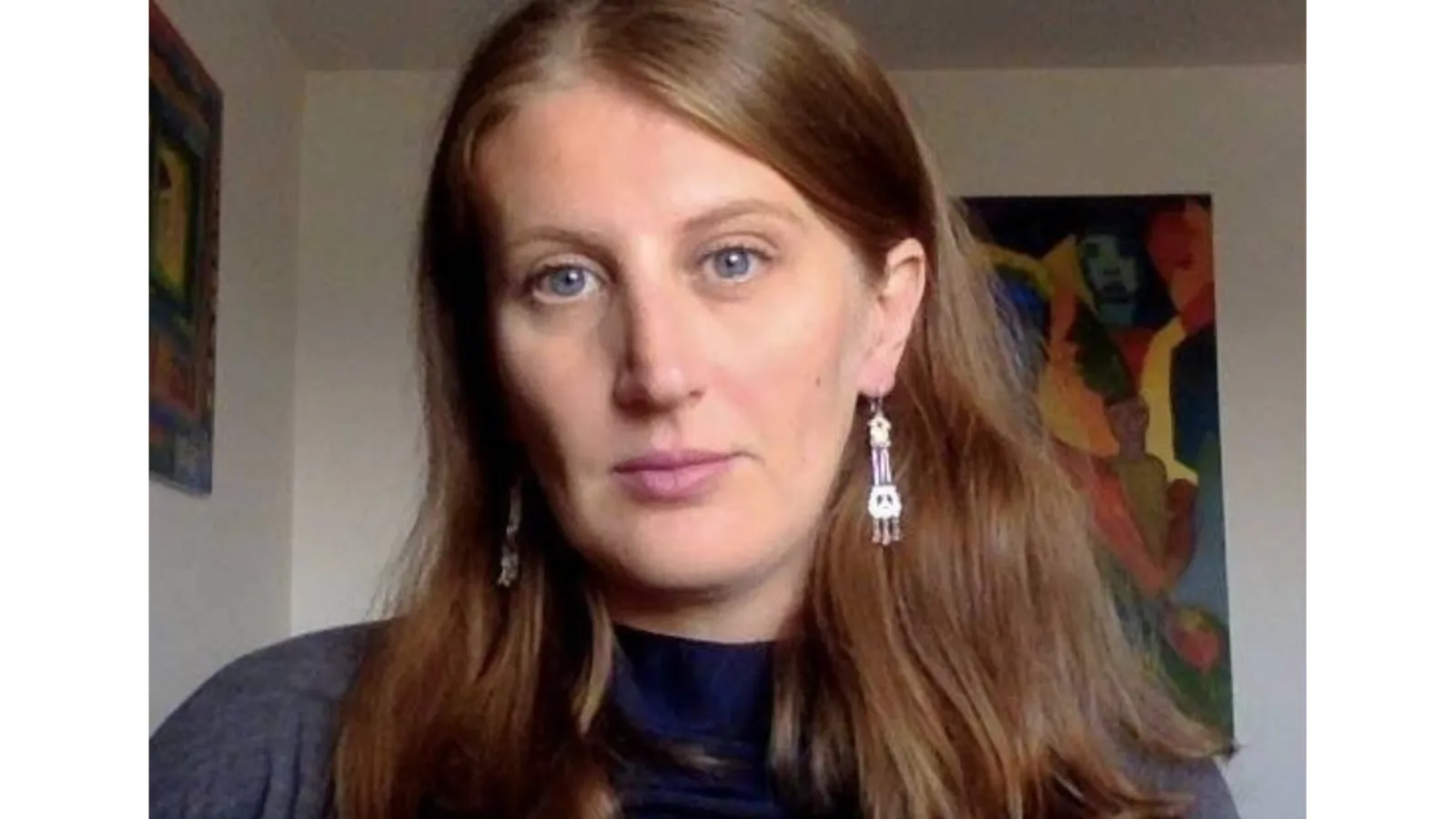
Caterina Preda is Professor Habil. at the Department of Political Science at the University of Bucharest where she teaches undergraduate courses on Latin American politics, art and politics, a graduate course on cultural memory in South America and Eastern Europe and one on cultural diplomacy in critical areas. Her research is interdisciplinary and deals with art in dictatorships, artistic memory in post-dictatorships in South America and Eastern Europe (Chile and Romania), cultural memory, post-communism, and Latin American studies. She is the author of Art and Politics under Modern Dictatorships (Palgrave, 2017), The Union of Fine Artists and the State Artist (in Romanian, Ed. Idea 2023) and the co-editor, with Magdalena Radomska, of Plural and Multiple Geographies of Modern and Contemporary Art in East-Central Europe (Routledge, 2024).
This event is co-sponsored by the Mershon Center for International Security Studies, the Office of Academic Affairs, and the Center for Latin American Studies.