The Eurasian Economic Union: Limitations and Prospects
While there’s been a surfeit of information written about the European Union, including its activities, history, and structure, there has been a distinct lack of writing about the Eurasian Economic Union (EAEU). The EAEU is active with more partnerships in 2025, including signing free trade deals with Indonesia and Iran, yet not much has been written recently as to what the EAEU is, how it functions, or how it compares to organizations such as the European Union. So, what is the EAEU?
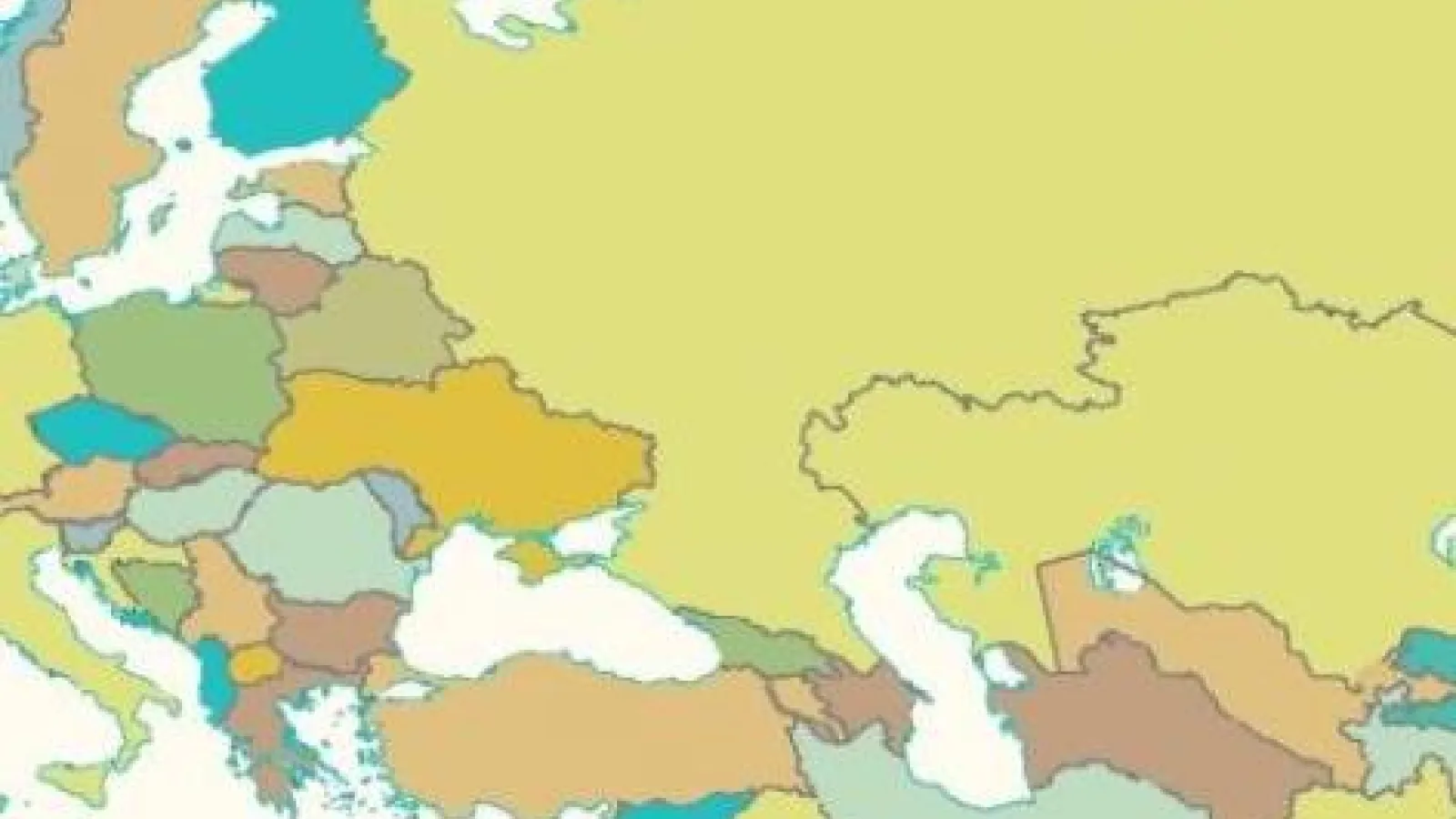
The Eurasian Economic Union is a trade bloc comprised of Belarus, Kazakhstan, Russia, Armenia, and Kyrgyzstan. Altogether, the EAEU has a nominal GDP of $2.391 trillion USD and a population of 185.5 million people. Observer states include Moldova, Cuba, Uzbekistan, and Iran. Additionally, the EAEU has trade agreements with non-member states, including China, Indonesia, Iran, Mongolia, Serbia, Singapore, the United Arab Emirates, and Vietnam; is in negotiations with Egypt and India; and is studying possible agreements with Tunisia.
The roots of the EAEU date back to 1994. Following numerous institutional arrangements, these treaties eventually consolidated into the modern organization of the EAEU in 2014. Functionally, the EAEU forms a single, common internal market for the free movement of goods, persons, services, and capital, while also applying a common tariff on non-member states. Although the EAEU is partly modeled off the European Union in its economic purpose and structure, the organizational differences between the two are stark.
The highest body of the EAEU is the Supreme Eurasian Economic Council, made up of all heads of state of the member countries. It has the task of negotiating foreign treaties, defining the strategy of the EAEU, and approving the budget. Below the Supreme Eurasian Economic Council is the Eurasian Intergovernmental Council (EIC), which is composed of the heads of government of each member state and has the task of implementing EAEU law. Finally, below the Intergovernmental Council is the Eurasian Economic Commission (EEC), which consists of both a Council and a Board. The EEC’s Council is made up of deputy prime ministers from each state, while the Board has two ministers per member state who are nominated to act independently of their state. The EEC is mainly tasked with creating and implementing decisions regarding the day-to-day activity of the EAEU, with the Board focusing on policy making while the Council can modify those decisions.
For a decision to be made, it must be approved by a 2/3 vote by the Board. Modifications to these policies or regulations can be made by the EEC’s Council through a consensus vote. However, if a member state objects to a decision by the EEC, it can appeal to the Intergovernmental Council, which can rule on the issue by a consensus vote as well. If no decision is made, the Supreme Council holds another consensus vote.
In theory, while most decisions, such as regulations, tariffs, economic policy, or labor migration, are made by the Board this isn’t always the case. The board lacks autonomy in its decision-making, as its policies can be both modified by the EEC Council or appealed to either the Intergovernmental Council or the Supreme Council. This can lead to situations where the interests of the EAEU are undermined by a member state, such as when Russia was able to avoid a $3.5 million USD fine by appealing to the Intergovernmental Council. Thus, not only is the chief decision-making body institutionally weakened in the EAEU, but power is subsequently concentrated in the hands of the Supreme Council because it has the last say on any decision.
This concentration of power is more apparent when looking at the powers the Supreme Council has as well. Not only does it have the last say on most decisions in the EAEU, but it also sets the agenda of the Union and can negotiate/implement foreign treaties. Comparatively, power is much more dispersed within the European Union. In the EU, legislation is proposed by the European Commission, which is then approved by the European Parliament and Council of European Ministers and interpreted by the Court of Justice. Unlike how states can de facto veto proposed regulations or laws in the Eurasian Economic Union through appeals, laws in the EU can’t be easily blocked. Furthermore, for laws to pass in the EU, a majority is needed (simple in the parliament; qualified in the council of ministers), as opposed to requiring a 2/3 vote by the board or consensus by any of the other bodies.
Furthermore, while the EAEU has the Court of the Eurasian Economic Union that is supposed to ensure the laws of the EAEU are enforced, it is institutionally constrained in this role. Its jurisdiction is activated upon the request of member states, economic entities, or individuals, and can’t be requested by institutions of the EAEU. It also cannot issue preliminary rulings that allow national courts to interpret EAEU law in a uniform manner. Compared to the Court of Justice in the EU, who can take cases from both institutions and member states as well as issue preliminary rulings, the EAEU’s court isn’t effectively able to interpret law.
A possible reason for this lack of institutional autonomy is that the states of the Eurasian Economic Union may not be willing to give up sovereignty to such a regional organization for now. It took the European Union decades to turn into the supranational organization it is today, one in which states voluntarily give up some of their sovereignty for the benefit of all. If the EAEU’s development is similar to the EU’s, the longer it exists and the more benefits it provides to member states, in addition to stable public support for integration, the more willing these states may be to transfer their sovereignty to the union.
Yet amid these institutional constraints and concentration of power in the Supreme Council, the EAEU has provided undeniable benefits for its member states outside of Russia.
One of the most successful elements of the EAEU is its development of the common labor market, which has tangible benefits for states like Kyrgyzstan. Not only does this common labor market save a Kyrgyz migrant $1,000 a year due to the automatic recognition of their qualifications it provides, but $1.9 billion in remittances out of Kyrgyzstan’s $2.5 billion total in 2017 were received from Russian markets. States like Armenia and Belarus also saw benefits, which included increased exports and benefits from oil/gas deals, respectively. Finally, economic integration has progressed despite hiccups, alongside the EAEU seeing a steady increase in trade volume and an increasing number of trade negotiations and treaties with external states.
Thus, while the EAEU may be weakened institutionally because of the concentration of power in the Supreme Council, it still provides benefits to its members. It’s an important trade bloc in the Eurasian landscape and is slowly expanding its reach.